
I Wore Long Sleeves For Four Arizona Summers To Hide The Purple Bruises On My Arms. This Is What Changed.
For four summers I gardened in a buttoned-up shirt in 105-degree heat because of the purple bruises on my forearms and the backs of my hands. I was told it was my age. I thought I had turned clumsy. Then a wound care nurse told me what the sun had done to the skin on my arms, and what she uses on her own.
 By Carol Ann Dutton, 72, Tucson, Arizona · November 2026
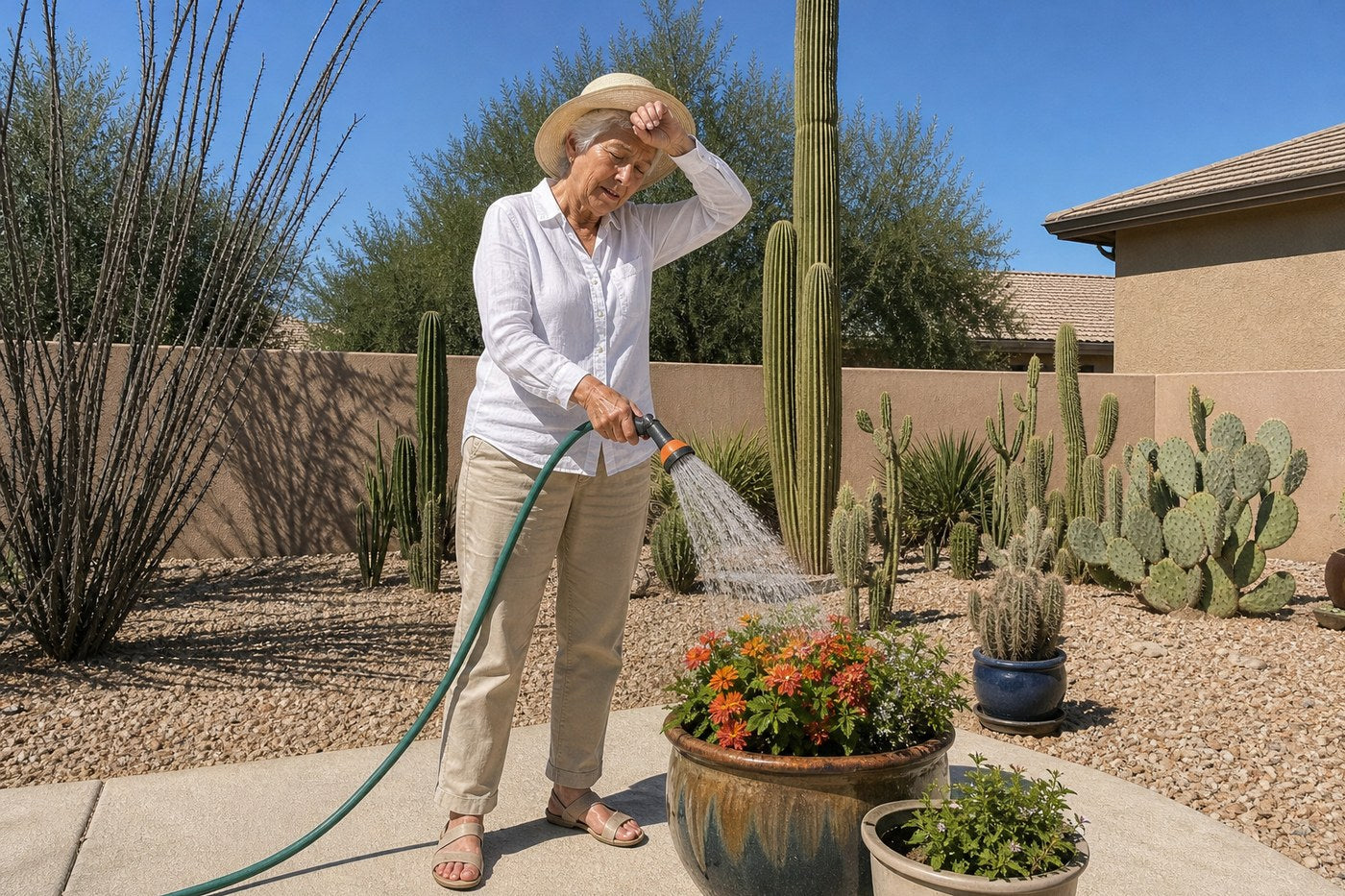
The cashier asked what had happened to my arms
I worked as a bank teller for 31 years, and I have gardened in Tucson for longer than that. Tomatoes, peppers, and more roses than my husband thinks is sensible.
The bruises started when I was about 66. One purple patch on my forearm that I could not account for. I assumed I had caught it on the wheelbarrow.
By 68 I had three or four on each arm at any one time, and the backs of my hands were blotched purple and brown.
One morning at the grocery store, the young woman at the register looked at my arm and asked, "Oh my goodness, what happened to you?"
She was being kind. I told her the truth, which was that I did not know. Then I went out to the car and cried.
"Bruises on the forearms are very common at your age. Try to be careful."
I went to my doctor. He looked for about a minute and said it was very common, that it was harmless, and that it came with age. He said to try to be careful.
I asked what I could do about it. He said there was not really anything.
So I tried to be careful. I stopped carrying the grocery bags on my arm. I wore gloves to prune. I still had a new purple mark every week, from things I could not even remember touching.

Four summers of long sleeves because of the bruises on my forearms
I bought long-sleeved shirts in every color. I buttoned the cuffs in July. I told people I was keeping the sun off.
I tried body make-up, which came off on everything. I tried a bruise gel from the drugstore and dabbed it on each new mark as it arrived. I tried a thick lotion that sat on my arms and did nothing I could see.
At my granddaughter's birthday party I kept my hands under the table.
My husband said, "Nobody is looking at your arms." Somebody at the grocery store had been.
The wound care nurse who told me why only my forearms bruise
The following spring I tore the skin on my forearm on a rose cane, and the clinic sent me to a wound care nurse to have it dressed. Her name was Diane Hollis, RN. Twenty-seven years in wound care.
I apologized for the state of my arms and said I had become clumsy. She stopped what she was doing.
Nobody had told me that. In all those years I had been told it was common and that I should be careful.
Why thin skin on the forearms bruises from a touch: the small vessels have lost their padding
She explained it in about two minutes. Under your skin is a thick layer full of collagen, and the small blood vessels run through it. It pads them. Sixty years of sun breaks that layer down, and the forearms and the backs of the hands get more sun than anywhere. In Tucson, more than most.
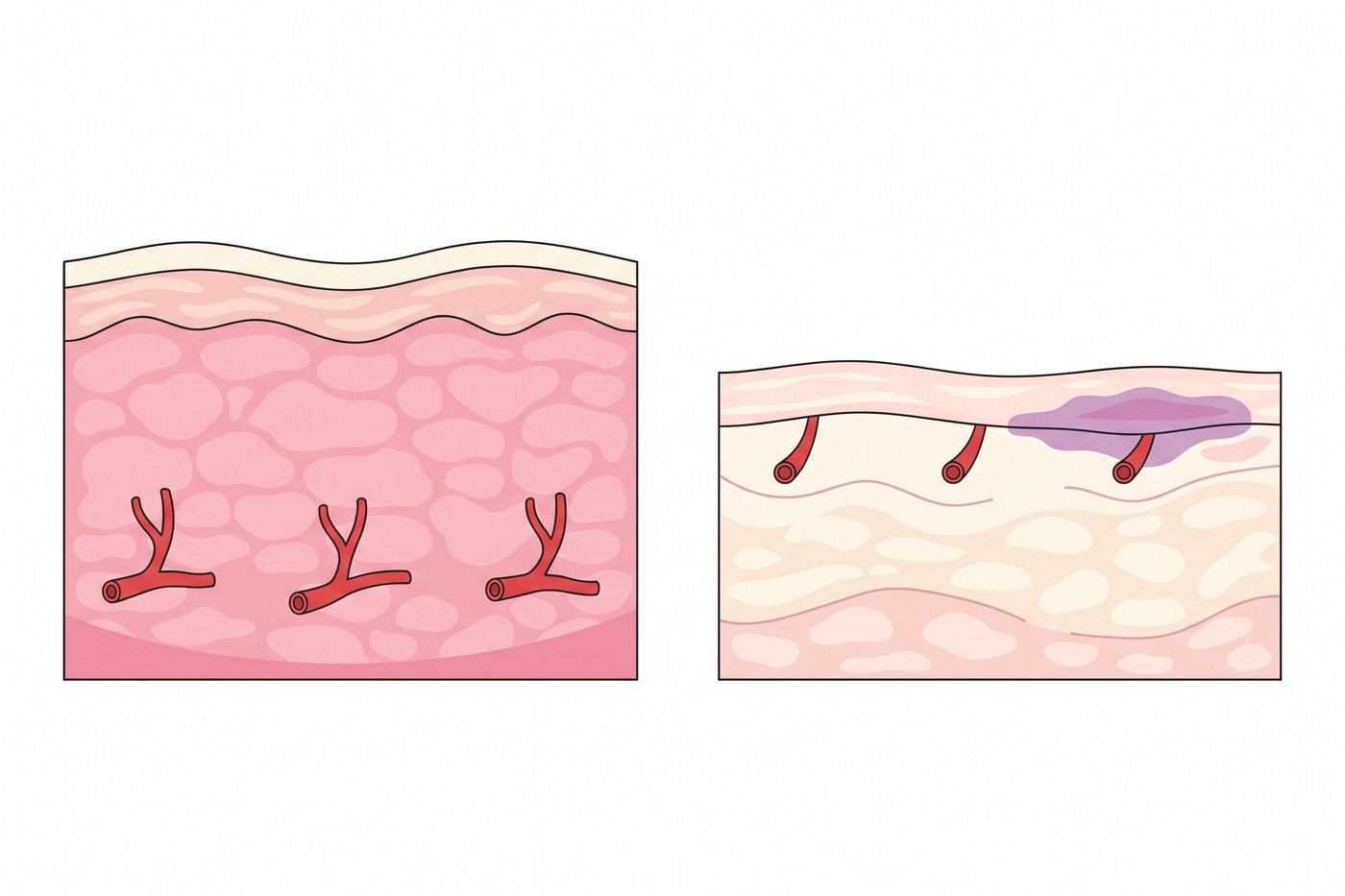
The skin over the forearm gets thin, so the vessels sit right under the surface.
A light knock breaks one, and a little blood leaks out.
The thin skin hides none of it, so you see a flat purple patch.
It does not hurt, and it takes weeks to fade.
Four years of blaming myself, and nobody had mentioned the sun.
An arnica and vitamin K cream for thin, fragile skin, used on the whole forearm
She told me what she uses on her own arms. A cream with arnica and vitamin K, made for fragile skin. She said the mistake everyone makes is dabbing something on one bruise. She massages it into both forearms and the backs of both hands every day, because that is the skin the bruises come from.
She also told me that bruising which comes on suddenly or shows up where the sun never reached should be seen by a doctor, and never to stop a prescription on my own, which I pass on to you.
I ordered it that night. It is a pale-yellow cream in a dark blue jar with a silver lid. It is smooth and silky, and it went into my skin without leaving my sleeves sticky.
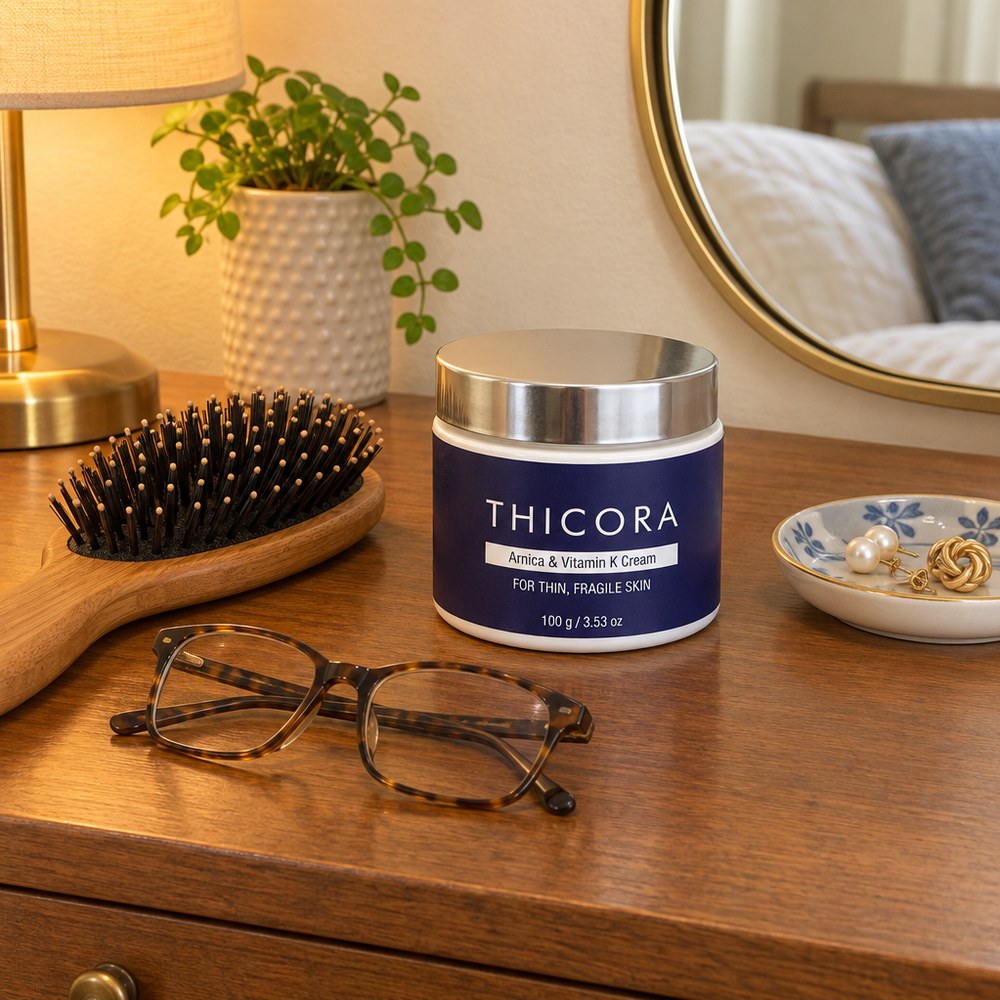
The purple bruises on my forearms looked fainter, and my skin stopped feeling like paper
The first thing I noticed was the feel. The dry, papery skin on my forearms felt soft under my hand.
Then the marks I had looked fainter. The purple softened, and the brown shadows on the backs of my hands looked lighter. My arms looked more even than they had in years.
Now my forearms look and feel stronger, like skin that is being looked after, and I do them every day as part of getting dressed.

I can only tell you what happened to me, and everyone's skin is different. But I gardened in short sleeves this summer, and I put my groceries on the belt with both hands.
What I tell other women with bruised forearms and thin skin
Start with two jars, because you are doing both arms and both hands every day and not one spot. They sell it buy-one-get-one-free for Early Black Friday, so an order is two jars for $69, which is $34.50 a jar instead of $138 for two. Shipping is free.
Wash and dry your arms, put the cream on, and massage it in until it is absorbed. Keep it away from your eyes and any broken skin. There is a 90-day money-back guarantee, so if you do not like what you see on your own arms you email and get a full refund.
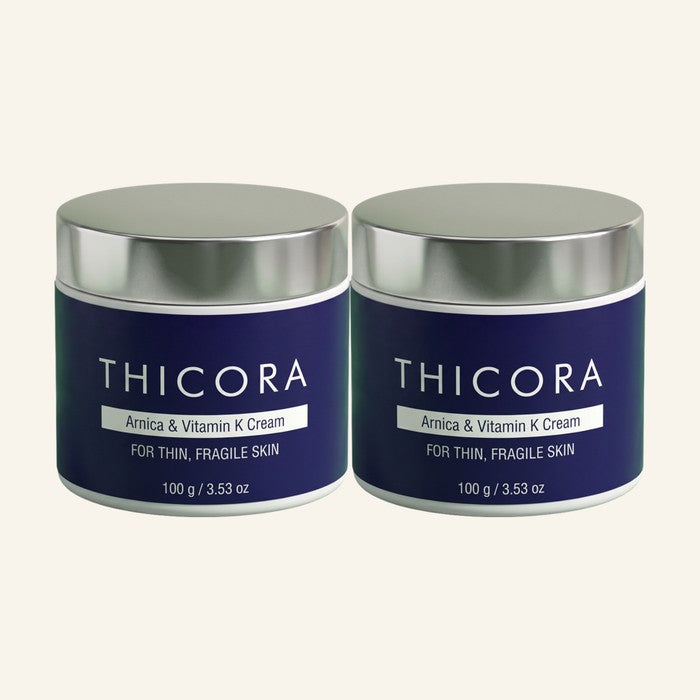
Thicora Arnica & Vitamin K Cream
$69 for two jars $138 · buy 1 jar, get 1 jar free
- Arnica and vitamin K to help fade the look of bruising
- Supports thin, fragile skin on the forearms and hands
- Soothes and hydrates
- Smooth and silky, gentle enough for daily use
- 100 g jar: massage in until absorbed
- Free US shipping · 90-day money-back guarantee
The information on this page is not medical advice and is not a substitute for a consultation with your own doctor. Thicora Arnica & Vitamin K Cream is a cosmetic skin-care product for thin, fragile skin. It is not a medicine and is not intended to diagnose, treat, cure or prevent any disease. For external use on intact skin only; keep away from eyes and broken skin, and stop use if irritation occurs. Individual experiences vary. Sudden, unexplained or widespread bruising needs to be seen by a doctor, and prescribed medication should only be changed by your doctor.
Privacy Policy · Terms of Service · Refund Policy
© 2026 Thicora. All Rights Reserved. support@thicora.com